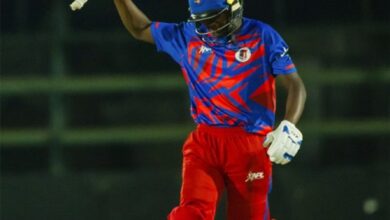
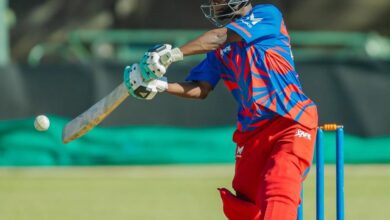
GLADIATORS Cricket Club lost their opening match of the NPL T20 Blast to Rimuka, the same side they would eventually have to beat to reach the final.
By Saturday evening, Gladiators had won three knockout matches in three days, retained their title and collected US$25,000 in prize money.
Their seven-wicket victory over SOGO Rangers at Harare Sports Club ended a tournament in which the defending champions had to survive a nervous eliminator, settle scores with Rimuka and then overcome a Rangers side that had already secured its place in the final.
Rangers took home US$20,000 as runners-up after a campaign that produced some of the competition’s most aggressive batting.
This year’s tournament also brought eight players from Uganda, Nigeria, Rwanda and Tanzania into Zimbabwe’s domestic cricket, with Rwandan pace bowler Ignace Ntirenganya making an immediate impression against the eventual champions.
The first warning for Gladiators came on 8 October when Rimuka beat them by seven runs.
Chasing 144, Gladiators were restricted to 136 for eight, with Ntirenganya taking five wickets for just 18 runs.
The Rwandan was one of the visiting cricketers invited to play in the competition through Zimbabwe Cricket’s initiative involving African Associate nations. His spell gave Rimuka a winning start against the defending champions and set up a rivalry that would resume in the knockout stages.
Gladiators responded against Rangers the following day, although they needed an outstanding innings from Naison Mare to do it.
Alistar Frost had struck 95 from 53 balls as Rangers posted 183 for five. Mare answered with an unbeaten 85 from 51 deliveries, carrying Gladiators to a six-wicket victory with an over remaining.
Mare kept scoring throughout the tournament and finished with more runs than anyone else.
His 313 runs from nine innings came at an average of 52.17, with two half-centuries and 12 sixes.
He was also the batter Gladiators turned to when they needed runs in the knockout matches, scoring 73 against Rimuka in the second qualifier before remaining unbeaten on 33 in the final.
Lennox Chando gave the champions another reliable source of runs.
The wicketkeeper-batter finished with 301 runs from 10 innings at a strike rate of 162.70, hitting a tournament-high 44 fours.
He was equally busy behind the stumps, topping the wicketkeeping figures with 17 dismissals in 10 matches.
Captain Milton Shumba scored 237 runs at an average of 39.50, meaning Gladiators supplied three of the tournament’s five leading run-scorers.
Those contributions helped them through matches that were far from comfortable.
Against Takashinga Patriots 1, Gladiators needed 197 to win and got there with two wickets and two balls remaining. They also beat Queens Cricket Club by 39 runs.
But the real examination came when a single defeat would have ended their title defence.
In Thursday’s eliminator at Takashinga, Gladiators reduced Old Hararians to 16 for five before allowing them to recover to 123 for nine.
Arineshto Vhezha took three wickets for 28 runs, Victor Nyauchi claimed two for 12 and Tony Munyonga finished with two for 20.
Gladiators then made hard work of the chase.
Shumba scored 32 from 24 balls, but Old Hararians kept taking wickets and forced the champions to bat into the 19th over.
Gladiators eventually reached 124 for six in 18.1 overs, winning by four wickets with 11 balls remaining.
They had escaped elimination, but Rimuka were waiting in Friday’s second qualifier.
The side that had beaten Gladiators in the opening match now stood between them and another final.
This time, Mare led the batting with 73 from 44 balls, while Ashley Mufandauya added 39 from only 18 deliveries.
Gladiators posted 201 for seven, leaving Rimuka with a far more demanding chase than in their first meeting.
Vhezha then took the match away from them.
His five wickets for 20 runs helped dismiss Rimuka for 94, giving Gladiators a 107-run victory and a place in Saturday’s final.
Rangers had beaten Rimuka by 28 runs in the first qualifier and enjoyed an extra day to prepare. Gladiators had to play again less than 24 hours after their emphatic win.
Yet their bowlers gave Rangers little room to build a match-winning total.
Vhezha and Phase Mukabeta took three wickets each as Rangers finished on 154 for eight.
Dion Myers made 35, Michael Frost scored 34 and Dane Schadendorf contributed 26, but none could turn a start into the substantial innings Rangers needed.
Mufandauya then produced the innings that settled the championship.
Having returned to the Gladiators side for the closing stages of the tournament, he struck 85 from 54 balls, including seven fours and two sixes.
He and Mare added 104 for the second wicket, taking Gladiators from 29 for one to 133 for two.
Mare remained unbeaten on 33 as the champions reached 158 for three in 18.2 overs, winning with 10 balls to spare.
Mufandauya was named player of the match, but Vhezha had been just as important in getting Gladiators to the final.
He took three wickets against Old Hararians, five against Rimuka and another three against Rangers.
Eleven wickets in three knockout matches was a remarkable return at the point when Gladiators could least afford a poor bowling performance.
Nyauchi also finished among the tournament’s leading bowlers, taking 14 wickets from nine bowling appearances.
The overall wicket-taking honours, however, went to Takashinga Patriots 1’s Ryan Simbi.
Simbi claimed 19 wickets from just six bowling innings, averaging 7.89 and conceding 6.52 runs per over.
Rimuka’s Tendai Chisoro and Rangers’ Daniel Jackiel finished with 18 wickets each, while Ntirenganya was fourth with 16 wickets from eight bowling appearances.
The Rwandan averaged 9.69 and had an economy rate of 6.20, figures that underline how effectively he competed in his first NPL T20 Blast campaign.
His five-wicket haul against Gladiators was one of the performances that shaped the early tournament, and his bowling helped Rimuka reach the second qualifier.
Rangers’ Matthew Campbell was another player whose individual figures stood out.
He scored 250 runs from nine innings, including three half-centuries, more than any other batter managed.
He also hit 17 sixes, the highest number in the tournament, ahead of Takashinga’s Kudzai Maunze with 13 and Mare with 12.
Frost contributed 207 runs from seven innings, including his 95 against Gladiators during the league stage.
Across the 32 matches, batters scored 8,885 runs, hitting 727 fours and 286 sixes.
There were 26 half-centuries but no hundreds. Bowlers took 438 wickets, while the fielding figures included 205 catches and 14 stumpings.
Those numbers tell part of the story, but the tournament also offered a closer look at how cricketers from African Associate nations could fit into Zimbabwe’s club game.
Eight players from four countries were placed with different teams, giving them a chance to face Zimbabwean opposition and work alongside players familiar with the country’s domestic cricket.
Tanzania’s Laksh Bakraina joined Gladiators and finished the tournament with a winners’ medal.
The 19-year-old left-arm spinner took six wickets in six bowling appearances, averaging 17.33 with an economy rate of 5.47.
His compatriot Dhrumit Atul Mehta joined Rangers, putting Tanzanian players in both squads that reached the final.
Rwanda’s Ntirenganya represented Rimuka, while Oscar Manishimwe played for Eastern Titans.
Uganda’s Gerald Olipa joined Takashinga Patriots 1 and Juma Miyaji played for Old Hararians.
Nigeria was represented by Elijah Saturday Jimmy at Queens Cricket Club and Prosper Buden-Ikpe Useni at Mbizo.
The players experienced different conditions and, in several cases, matches with qualification or elimination at stake.
Ntirenganya showed how much a visiting player could contribute when his five wickets helped Rimuka defeat Gladiators.
Bakraina, meanwhile, was part of the squad that recovered from that defeat and went on to win the championship.
The Tanzanian said he valued the chance to play in a country with Test cricket experience.
“I think it’s been a great opportunity for us, and not just me alone, but other players from other associated nations, to see what playing in this nation is at the high level of competition,” he said.
He also found the Gladiators dressing room easier to settle into than he had expected.
“They’ve been really welcoming, they’ve been really nice to me, they’ve been like family. I feel like I’ve known them for a long time,” he said.
Bakraina hopes to return next season and contribute more.
“I just did my best, but I hope to come back again and perform even better.”
The visiting players’ involvement gave the competition an added African interest, particularly with Ntirenganya finishing among its leading wicket-takers and Bakraina celebrating the title with Gladiators.
On the field, there was enough competition to make Gladiators work for every stage of their title defence.
Rimuka beat them once and forced a second meeting in the knockout rounds. Rangers produced some of the tournament’s strongest batting performances and reached the final. Old Hararians pushed the champions harder than expected in the eliminator.
Gladiators came through because different players delivered when they were needed.
Mare supplied runs from the opening stages to the final, Chando combined aggressive batting with dependable wicketkeeping, Vhezha took 11 wickets across the three knockout matches and Mufandauya made his biggest contribution with the trophy on the line.