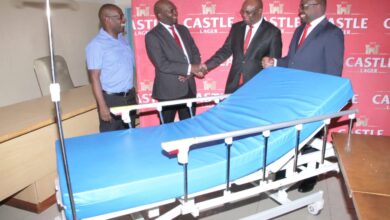
CIMAS Health Group has renamed its Bulawayo Medical Centre after late medical pioneer Dr Sipho Leonard Vivian Zwana, in a move aimed at preserving the legacy of one of Zimbabwe’s trailblazing black doctors.
The facility was officially renamed the Sipho Zwana Medical Centre at a ceremony in Bulawayo on Wednesday, with Cimas describing the decision as more than a tribute to an individual, but a permanent reminder of a generation that helped shape Zimbabwe’s healthcare system.
Dr Zwana, who was born in 1933, made history in 1960 when he qualified as a medical doctor from the University of Natal Medical School in South Africa.
Ten years later, he became the first black Zimbabwean anaesthetist after obtaining a Fellowship of the Royal College of Surgeons.
He also became the first black doctor permitted to work at Mpilo Hospital in Bulawayo in 1961.
His career subsequently took him to several institutions in Zimbabwe and abroad, including Harare Central Hospital, Cardiff Royal Infirmary in the United Kingdom, Korle Bu Teaching Hospital in Ghana and Kenyatta Hospital in Kenya.
After decades of service, Dr Zwana returned home and worked at Bulawayo Central Hospital before joining Mater Dei Hospital, where he remained until his retirement in December 2013.
He died in February 2019 after a medical career spanning 52 years.
Speaking at the renaming ceremony, Cimas Health Group chief executive officer Vuli Ndlovu said the occasion was about ensuring that Dr Zwana’s contribution remained part of the country’s institutional memory.
He said the decision was not simply about putting a new name on a building, but about creating a lasting monument to a man whose career was defined by service.
Ndlovu traced Dr Zwana’s journey to a 1954 government bursary circular that listed eight black students selected for medical training, including Zwana and other future national medical and political figures.
He described the bursaries as part of a generation that helped lay the foundations for a future Zimbabwe.
Dr Zwana’s decision to specialise in anaesthesia was also highlighted as a reflection of his commitment to service.
Unlike specialties where doctors often receive public recognition, anaesthetists frequently work behind the scenes, monitoring patients and ensuring their safety during surgery.
Ndlovu said that invisible role resonated with Cimas’ own approach to healthcare.
“In our eightieth year, Cimas stands exactly where he stood, at the head of the bed,” he said, drawing parallels between the work of an anaesthetist and the medical aid society’s role in ensuring patients receive care when they need it most.
Ndlovu said the renaming should be viewed as “infrastructure for memory”, ensuring that Dr Zwana’s story would continue to be encountered by patients, healthcare workers and future generations.
Bulawayo Metropolitan Province Minister of State for Provincial Affairs and Devolution Judith Mkwanda-Ncube described the honour as an important recognition of a medical pioneer whose contribution extended well beyond the city.
She said Dr Zwana’s achievements demonstrated how individuals could overcome barriers and make lasting contributions despite the limitations of their time.
“The renaming of this facility to Sipho Zwana Medical Centre therefore adds another chapter to Bulawayo’s story,” she said.
Minister Mkwanda-Ncube also commended Cimas for choosing a permanent way of preserving the doctor’s legacy.
She said the greatest tribute would be for the values that Dr Zwana represented to continue influencing doctors, nurses, scientists, students and other healthcare professionals.
Dr Zwana’s career was not confined to medicine. According to his family, he had a passion for music, literature and gardening, having sung with a band known as the Broadway Crooners and maintained an interest in African literature.
Cimas said the renaming also comes as the organisation marks 80 years in the healthcare sector.
Established in 1945, Cimas has expanded from a medical aid society into a broader healthcare and wellness organisation, with operations spanning medical aid, clinics, laboratories, pharmacies and wellness services.
The government welcomed the continued contribution of private healthcare providers to the national health system, particularly through investment in infrastructure, technology, diagnostics and healthcare services.
Minister Mkwanda-Ncube said the public and private sectors had an important role to play in expanding access to quality healthcare.